
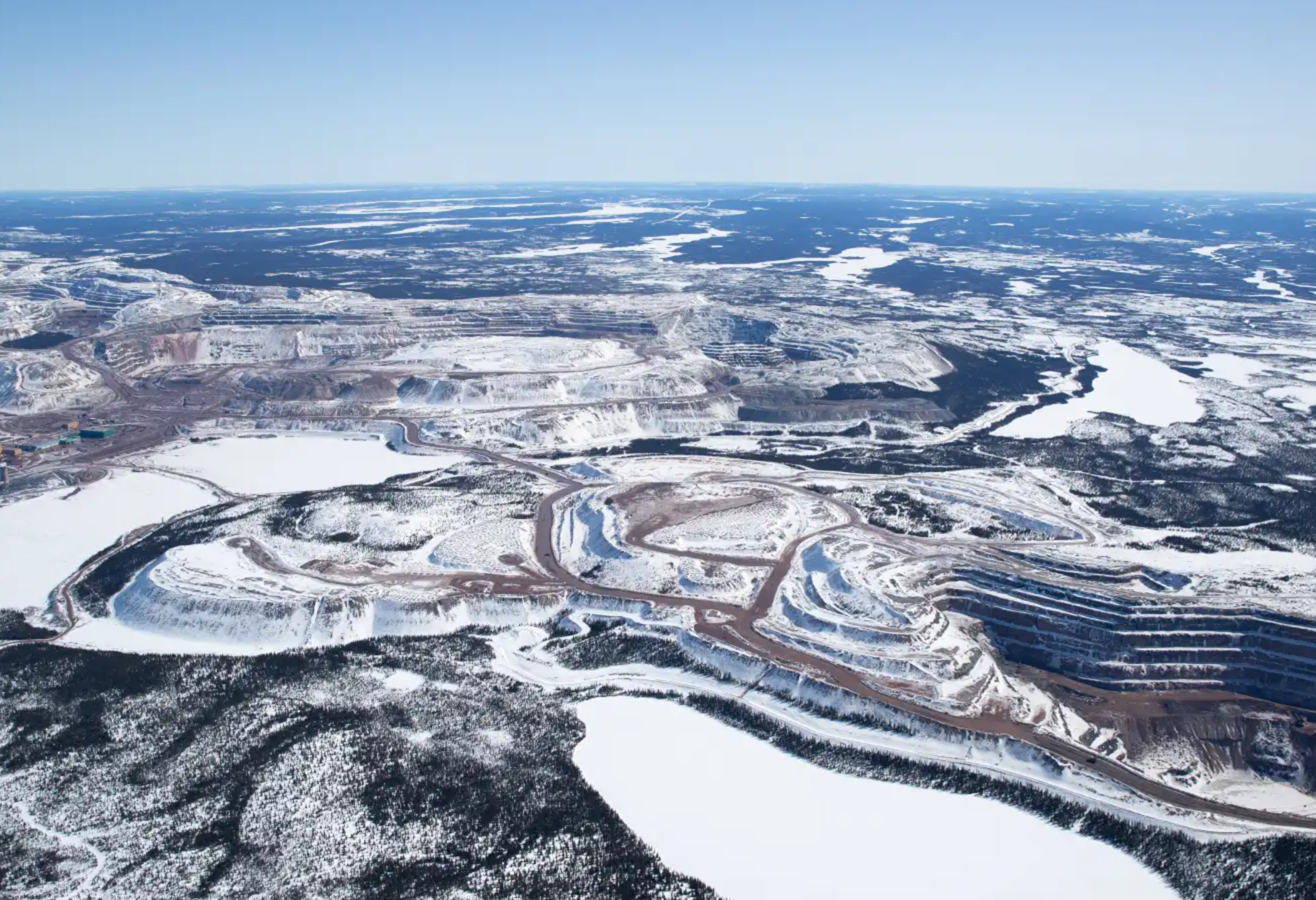
From restoring marine habitats to partnering with Indigenous communities, AMMC is delivering meaningful environmental action that protects ecosystems and reinforces ArcelorMittal’s sustainability commitments.
Revitalizing marine life and ecosystem at Port-Cartier
To mitigate the ecological impact of sediment dredging at our Port-Cartier shipping operations, AMMC established an artificial reef as a habitat compensation initiative. In recent years, 225 concrete reef structures have been deployed to support marine biodiversity.
Within the first year, the reef achieved 95% algal coverage, while faunal diversity doubled. Ongoing surveys in 2025 have already identified new taxa, demonstrating the project’s growing ecological value. Additional monitoring planned for 2026 will further assess the reef’s long-term environmental performance and resilience.
Innovating Land Rehabilitation with Willows
In 2023, Mont-Wright launched an innovative ecological restoration pilot: a 1.5-hectare experimental plantation featuring 27,000 willows across 16 varieties. By 2025, five willow varieties have been identified as particularly well adapted to local growing conditions.
The success of this pilot paves the way for expansion to a 100-hectare plantation representing approximately 1.6 million willows on selected areas of the tailings storage site.
Beyond revegetation, this enables on-site production of ramial chipped wood, which is used as organic matter for land rehabilitation. By reducing reliance on imported materials, the project strengthens operational sustainability while enhancing soil quality and biodiversity across the site.
Supporting Atlantic Salmon Migration
The Nipissis River is home to abundant Atlantic salmon, whose lifecycle depends on successful upstream migration. To offset habitat impacts associated with the mine tailings expansion project in Quebec, AMMC restored the fishway at McDonald Falls, enabling salmon to bypass natural obstacles and reach upstream spawning grounds.
Developed in partnership with the Innu Indigenous community, the fishway restoration was completed in 2021. Since then, improved access to upstream habitats has contributed to increased salmon productivity. Following successful monitoring efforts in 2024, a new assessment campaign is scheduled for 2026.
By restoring the McDonald Falls fishway, AMMC is safeguarding aquatic biodiversity while strengthening collaboration with local Indigenous partners.
Establishing a pathway to smarter and more sustainable future.
Together, these projects demonstrate AMMC’s commitment to protecting biodiversity, reducing environmental impact, and building strong partnerships with the communities where we operate.
Looking ahead, the focus remains clear: drive innovation, foster collaboration, and ensure our operations create lasting positive impacts for both the environment and the communities we serve.