• 4 min read
I-See: our AI innovation enabling assessment of diffuse dust emissions
In heavy industry, the biggest environmental challenges are not always the most well known.
PM10 particles are microscopic airborne matter generated by vehicles, industrial processes, and natural phenomena that pose significant risks to both air quality and public health. This study focused on improving emission assessment within the steel industry and developing targeted strategies to reduce PM10 output.
Steel plants generate diffuse dust emissions from two principal source categories:
• Process Diffuse Dust Emissions arise during active operations from equipment such as the Sinter Cooler, Steel Shop, and Electric Arc Furnace — particularly where secondary dedusting systems have not been adequately adapted to current operating conditions. Findings from the I-See project indicate that these emissions are most pronounced in older facilities whose dedusting infrastructure has not undergone recent upgrades.
• Open Source Diffuse Dust Emissions stem primarily from material handling activities, with intensity varying according to weather conditions and operational factors. The I-See project demonstrated that targeted chemical treatments can effectively suppress the formation of this dust type.
Quantifying diffuse dust emissions presents a particular challenge. Unlike point sources, they cannot be traced to a single origin. Instead, they migrate across surfaces and shift in response to wind conditions, humidity levels, and operational activity making accurate measurement and targeted action considerably more complex.
In 2019, ArcelorMittal began an innovative research and development (R&D) project to measure, assess and take action to reduce the impact of diffuse dust emissions. Today, we are proud to report that we have succeeded, and are now rolling out this sector-leading innovation around the world.
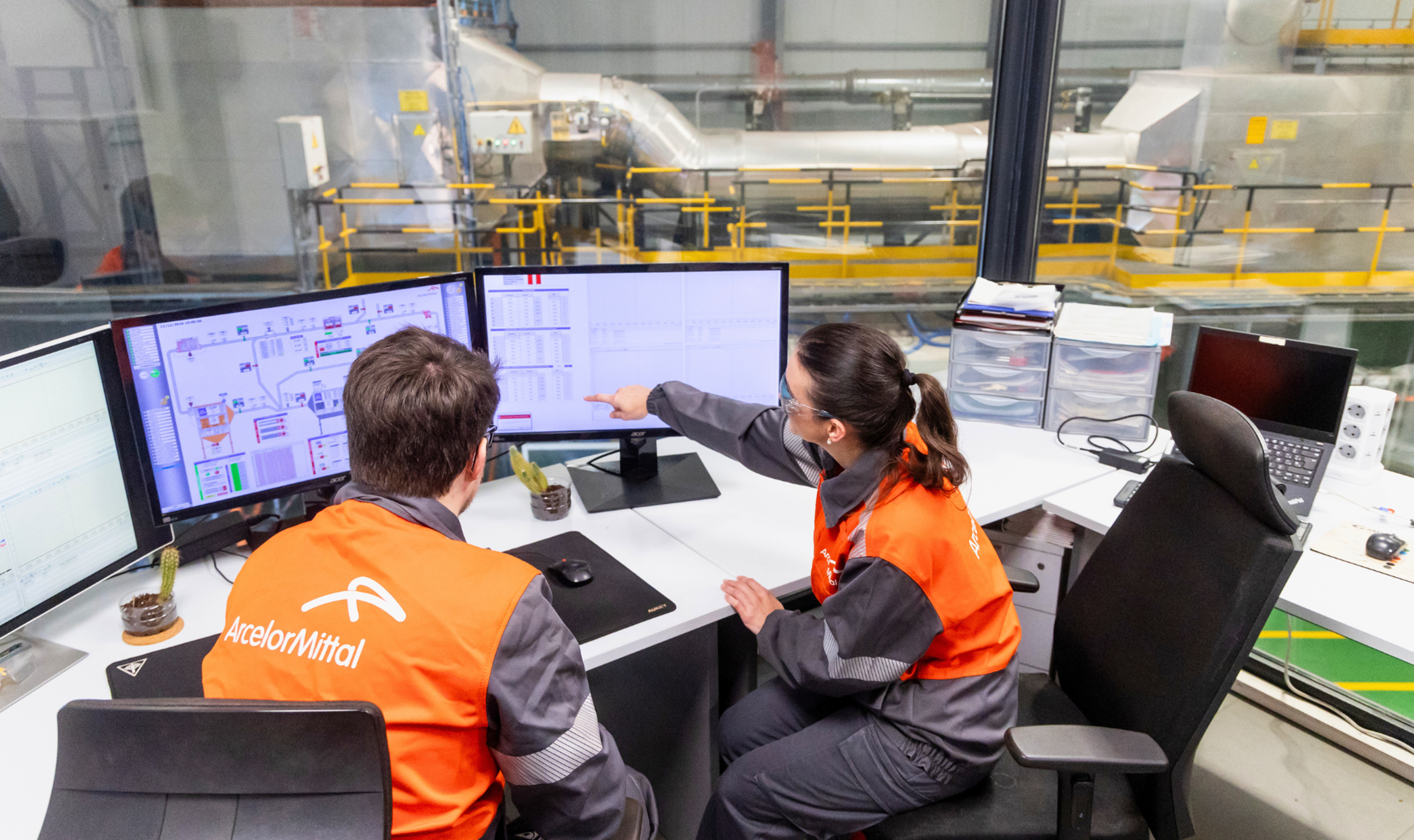
The I-See Toolbox gives our manufacturing sites the capability to monitor diffuse dust emission sources, quantify their relative significance, act to reduce them, and measure the results.
This is made possible by a distinctive combination of tools. AI-powered cameras work alongside remote and particulate matter sensors to track emissions in real time. Air dispersion models and calculation tools leverage AI to estimate emissions at the source and simulate their impact on surrounding areas. On-site study methods allow us to measure and characterise dust emissions directly where they occur.
A uniquely innovative blend
I-See goes further than any comparable solution on the market, combining commercial tools, specialist expertise, and internally developed algorithms. The combination of advanced AI and extensive data enables ArcelorMittal to accelerate learning and achieve greater accuracy.
Standard algorithms, for instance, fail to detect emissions under certain weather conditions. By training our own algorithms on thousands of unique emission images captured across multiple ArcelorMittal sites, our software achieves four times greater plume visibility than conventional solutions in internal benchmarking. The insights generated are then analysed by plant environmental and operations teams, who translate them into concrete control actions.
Game-changing results. Worldwide potential.
I-See is a testament to ArcelorMittal's leadership in sustainability innovation. ArcelorMittal brought together cross-functional teams spanning Global R&D, Corporate Environment, CTOs, and multiple industrial plants including Asturias, Fos, Resende, Differdange, Tubarão, and Ghent, to help merge deep scientific expertise with disruptive, AI-powered technologies.
Scalable and ready to deploy, the I-See Toolbox standardises proven methods and best practices developed at individual sites and makes them available across the entire Group.
It is now being rolled out across ArcelorMittal, with progressive deployment as solutions are validated in different operating contexts. Another milestone in our commitment to making smarter steel for people and planet.
Related content
ArcelorMittal Liberia: Partners in prosperity
ArcelorMittal Liberia: Partners in prosperity