
You must accept marketing and preferences cookies to view this podcast.
Alternativly you can view the podcast at its source: https://open.spotify.com/embed/episode/16GWbqMWNQj8V4wNIMfLa3
Together, they explore the company’s climate action targets, the progress it has made towards decarbonisation, and the wider role the steel industry can play in supporting the transition to a low-carbon future.
Read the full transcript below...
Welcome to the podcast, Nicola. Brad, Brad, let's start with you and with the big picture. Since 2018, how much progress has ArcelorMittal made on emissions and what's driven that?
(Brad Davey)
Thank you, for having us here today, Tom.
It's a pleasure. So I will start with the bottom line numbers first, then. Since 2018, we use that as our reference year. Our absolute CO2 emissions are down by 47.7%. If we compare for, assets, we're down 27%.
And then lastly, our CO2 intensity has also improved and it's at a good progressing number of 1.79 tonnes of CO2, per tonne of steel. Now, you asked about the drivers. The first one is portfolio optimization.
What we've done is we have closed and, and divested assets that were inefficient and optimised. What we do run. If we look at the next step we've done, our incremental share of EAF capacity has risen from 19% to 26%.
And I'll talk more later about other projects we have underway that are going to increase this further. But so far we've invested in our Calvert operations in the US and two of our operations in Spain, Sestao and Gijon. We've also improved our operations, our operational efficiencies and some early decarb.
This hasn't been the major contributor so far, but we have other works underway. So I think the bottom line, message we want to leave is that we've made significant progress over these years, but also everything has become more complicated.
It's certainly different than what we had originally, envisioned would be the drivers of what would deliver, our decarb path, at least in these early years. And I'll just talk about some of the investments we've made because they've been significant and these are projects that are already completed or they're underway right now actively spending this money and will be up and running before 2030.
So, we'll see further progress from these. The first is around a portfolio we're calling just our decarb investments. It has been some modifications, improvements to existing EAFs. We've done pelletizing improvements and we've done a lot of engineering for the foundation for the future of how we're going to transform our operations and have them ready when the conditions are ready.
The second is on renewable energy and these weren't in our plan. So this is where we've pivoted a bit over the last few years and done renewable energy projects because some of the iron making projects and the technology weren't ready.
But we've invested over $2 billion in renewables. We've also purchased a, hot briquetted iron plant because this is also part of the future transformation we're doing and we're improving it and expanding on it.
We're investing in electrical steel. So electrical steels are a key component for the energy transition. And we're doing this, both in France in Mardyck and also in our US operations in Calvert. And then lastly we've just announced another EAF which is in Dunkirk.
And this is, a $1.4 billion investment. So if you total up that package I just Talked about, it's $6.9 billion of complete or in progress investments, in decarbonization. So again, I think we've done a lot, but it has been quite different and it has been more complicated than we thought.
Nicola, Brad referenced the changing environment there. You've revised your 2030 CO2 target to up to 10% down from 25%. What's changed and what's behind that decision?
(Nicola Davidson)
I mean, I think, Tom, when you look back to 2021, when we initially set that target, there was a huge amount of optimism in the world, and also alignment that we really had to put every effort into believing that we could achieve, net zero by 2050 within the 1.5 degree temperature threshold.
And that was absolutely the right and the only way to look at it because it clearly is a very ambitious transition that the world has set itself. And, it was important that as many people, as many countries, as many companies were really on board with that. From our perspective as a steel company, we always knew, we always made clear that our ability to make those targets, was very strongly correlated to the economics of green hydrogen, the economics of electrolysers, the cost of energy, etc.
But there were some very ambitious forecasts out in the market at that time, very aggressive forecasts for green hydrogen and the cost of green hydrogen falling quite dramatically by 2030. And it became increasingly clear, as we progressed through the 2000s that unfortunately the economics were not moving as rapidly, as was needed.
And I think it's, it's very interesting when we attend a lot of conferences, discussions, platforms on the, the whole climate topic and it's very interesting to see how the narrative is changed. And personally I think that honesty is only good because here we are in 2026 now and most of the conferences or discussions that I attend, there is a, there is a really honest realisation that actually there is probably going to be an overshoot of 1.5 degrees and net zero can still be achieved by 2050.
And I'd just like to reinforce the fact that that is very much still our 2050 target, but probably not within the 1.5 degree, temperature threshold. Some level of overshoot is now probable, and then coming down over the second part of the century.
So I would say that our targets when we set them back in 2021 were really ambitious targets and that's what everyone wanted. And we arrived in 2026 and lots of people are obviously asking us, are you on track to achieve the 25% target?
And as it became increasingly apparent to us that we weren't, obviously we had to reset it. So this time we took a very pragmatic approach, I would say, and linked the target to final investment decisions that essentially have been taken or that we knew would be taken very, very imminently.
And so that is how we calculated the up to 10% number. So yes, obviously it is a reduction but I think it's really important you heard from Brad just how much we are doing across the group and how much we'll continue to do. But we are, we're a very large group.
We're quite unique in the steel industry. We have operations in every major continent in the, in the globe. So clearly for us to, for us to achieve net zero, there is a lot of assets which need to transition. But we are making progress, we're making progress in lots of areas that actually we hadn't even considered back in 2021.
Brad highlighted renewables etc and one stat that I became aware of relatively recently that I actually find quite fascinating is that this year 70% of our strategic capex, will actually be invested directly in the energy transition across those three areas that Brad talked about.
So certainly a lot of activity, certainly still keeping the net zero by 2050ambition, but a more realistic 2030 target. Now we're within touching distance of 2030 in 2026.
Back to you, Brad. It feels like the transition is proving more complex than many expected. What are the biggest constraints today?
(Brad Davey)
Yeah, it's true Tom, that it is more complicated.
It's not just a switch that we're flipping, it is a whole system transformation both within our operations and then of course from external energy providers and steel industry has the label hard to abate industry because it's true, it is very hard to abate. And when I talk about the next four key facts, factors, each one of them has turned out to be more daunting than we had expected when we set the original plans about five years ago.
So the first key requirement is that we have the green energy in the quantities we need and at the cost level that we were expecting. And we were looking at cost curves coming down rapidly up to five years ago and those have not continued at the rate we were expecting.
The second is the technology maturity and scalability within particularly iron making but I also mentioned green energy. It's also in the hydrogen production and it's also in some of the solutions for carbon capture and utilisation.
So those technologies have not matured as quickly as we had expected or hoped. And that's holding us back a little bit at this point in time, although we've spent a lot of money trying to progress those technologies. The third is on policies.
If you look at the policy framework across the globe it's quite fragmented and in fact is not aligning at the moment. We thought there would start to be a common direction. But even in Europe which is from most respects leading in terms of the energy transition, they've changed policies quite a bit over the last few years to really make them more workable.
I think we've seen recently that we're pleased with where they're headed but it did take a number of years to really get the policies to start coming together. And so again it's always been a key factor and we're just seeing it progress a little more fragmented and a little more slowly and maybe some have thought in the early 2000 and twenties and the last is capital intensity and deployment time.
So capital costs always go up. But I think we've seen post Covid significant ramp up in capital costs for everything. And as these technologies have been more complicated and difficult we've seen that the costs have further escalated and of course also deployed which means some of the things even we thought we could deliver by 2030 might be 2032, 2033, this kind of profile.
So it has turned out to be particularly challenging for hard to abate sectors like steel. And this is going to be a phased multi decade transition. It's not going to happen, with one single breakthrough.
There's a lot of things that need to evolve and we're actively Working on all of them.
Nicola, despite all of those challenges, you've announced a major milestone recently with the new electric arc furnace at Dunkirk. Why is this particular investment so important?
(Nicola Davidson)
Yes, and I think you're right Tom. It really is a major milestone. And it sends a very strong signal to our stakeholders that when the conditions align we are absolutely present and ready to go ahead and take that final investment decision.
So you'll remember from our last conversation, we had a lot of planned investments across Europe, in new EAFs, and also in DRIs. And you heard from Brad about the challenges with the economics and the cost of electricity.
So the DRI side is really on pause for now with the focus being on the new EAF in a phased manner. And this is the first new electric arc furnace that we've been able to announce on the flat side of the business. So we have lots of electric arc furnaces across the group and I think it's really important that people remember that I made the point earlier on that we are a really big steel company and we operate every technology around the globe.
So we have blast furnaces, yes, but we have electric arc furnaces, we have DRI, so we know all of these technologies and we have plants around the world which are already producing some of the lowest carbon steels available today, across the world, including in Europe, which are sold under our XCarb® brand.
But understandably everyone's focus is on where will the next investment be. And as Brad talked about, I mean we knew that policy was important back in 2021 but that has only become increasingly apparent. And we work with all the different countries where we operate to explain that to them, to explain the conditions we need to support not just the Capex, for the lower carbon steel making.
In a way the Capex is the easier bit but also the opex. How, how much is it going to cost to run once the new asset is up and running? And I think we have very good conversations with all the governments around the world where we operate. And we were able to progress the situation in France including specifically and I think this was really important in terms of lower cost, low carbon, long term electricity, price.
And we reached a point place where we were confident that we could go ahead and give the green light to the new electric arc furnace. And I think it was very important symbolically for people to see. Yes, ArcelorMittal is committed to decarbonisation and also we took the opportunity to if you've read our sustainability report in the climate chapter.
We took the opportunity to do a transition plan for the Dunkirk site, just so that people could understand, you what's really involved when you take down a blast furnace and build an electric arc furnace. Because that's not a, it's not like as Brad said, you don't just press a switch and it happens.
You that's a three to four year transition. So I think it was, I think it was very important externally and also internally because obviously inside the company everyone is galvanised, everyone understands the change challenges of climate change. People really want to contribute, people want ArcelorMittal to move forward on this.
So I think it was also a really important symbol internally for our employees as well.
Brad, you mentioned renewable energy where you're also investing directly. Why is that strategically important?
(Brad Davey)
Good question, Tom. So I did mention it as you said. And I also, I think mentioned that renewables, and us becoming an energy provider were not in the original set of plans we had, up to 2030. So I mentioned some of the barriers that have occurred.
There's not enough green energy and affordable enough. We've also struggled and still the whole market struggles with the cost and availability of green hydrogen. So the whole iron making has been delayed, along with some of the technologies there.
So when we saw this, we then said, okay, if green energy is one of the shortfalls in the energy transition, can we also jump in and do that? And obviously it directly impacts our scope two emissions. And we studied a lot of projects across the globe, globe and we continue to do this and we have launched a number of projects.
We have two major projects in India, one in Brazil, one in Argentina. We currently have 1.9 gigawatts of green energy commissioned. We're also building another 1.4 which will be up and running by 2028.
So 3.3 gigawatts total. And as I mentioned, this reduces our scope to emissions. It provides us a stable cost structure. Now for this green energy, we can feed this into our operations and the returns are acceptable on that side of it.
So the original plan was we were going to focus on the steel making operations, but we've become not just a user of green energy, we're actually helping to build the system. And this is where it's strategically important, Tom, because we're filling a void.
This investment goes beyond your own footprint as well, doesn't it? How is ArcelorMittal getting involved in Enabling that energy transition for others as well.
(Brad Davey)
Yeah, great question again Tom. So let me give you some examples. It's probably easier to start there. First we're investing in electrical steel which is critical for, for electric vehicles, hybrid vehicles and high efficiency motors.
And these higher efficiency electrical steels that we're specifically focused on are absolutely required for the energy transition. Our next piece we're doing is on advanced high strength steel solutions for automotive and also our new multi part solutions.
And we're continuing to put out new products that reduce the waste weight of vehicles, reduce the energy consumption, reduce the energy consumption within our steel making operation. But these multi parts also reduce the complexity and energy to build a vehicle.
So we continue to focus on ways to help our customers become more efficient and reduce their footprint. We're also developing advanced steels for wind application, advanced steels and coatings for solar application to make them last much longer and also advanced steels for hydrogen.
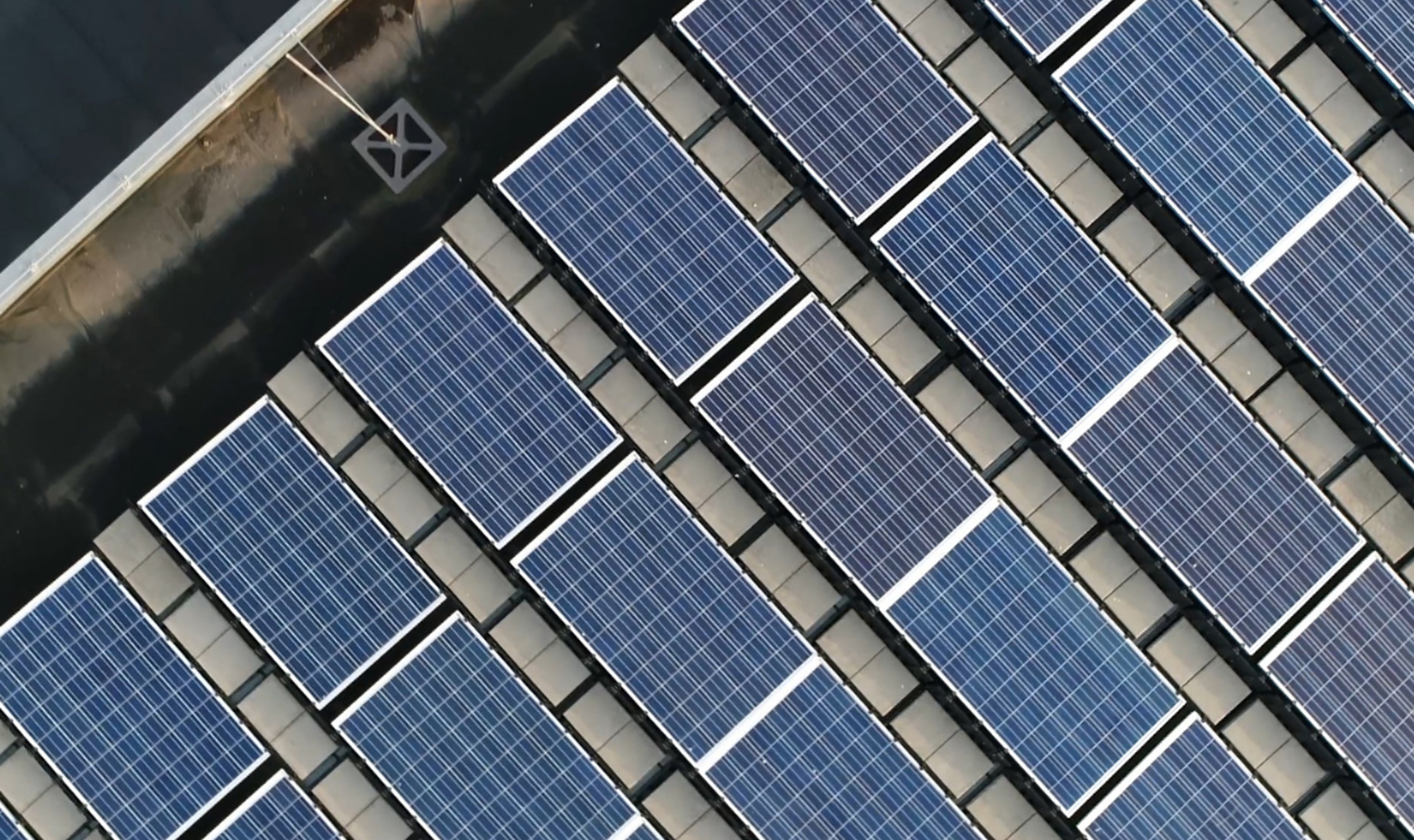
One of the biggest areas that we've also really pushed in our product development and applications is on low carbon construction. So one product called helioroof, it's with solar panels built into the roof tiles. It's a more cost effective and sustainable solution for the long term.
We have our XCarb steels. We were the first steel company to introduce a family of steels of significantly lower CO2 steels and we're keeping ahead of the market demand for green steels with this and we continue to grow this each year.
We're also focused on materials and solutions for our customers to build buildings and data centres in less time, with less energy, with less material and with a total lower CO2 footprint.
So we're doing a lot of work on solutions for our customers and I think everyone knows that steel is fundamental to the energy transition. A last figure that I'll just give you as well, Tom. We have disclosed in our sustainability reporting that 13% of our revenues are related to energy transition.
Now this is actually quite a narrow definition when we talk about that. Our actual contribution is more if you take all the things I just listed. But this 13% complies with EU taxonomy. It does cover revenue from renewables, EAFs, insulation panels and electrical steels that I talked about.
But it doesn't include the advanced solutions for automotive or steels for wind, solar or hydrogen. But again we're starting to track this, we're reporting it according to the regulations and we're making sure we're making advancements in all aspects of our business.
Looking Ahead Nicola, and feel free to chip in, Brad. What needs to change to accelerate progress again?
(Nicola Davidson)
I think both Brad and I have talked, Tom, about the importance of policy. And that's become really abundantly clear over the last five years.
And I think it's, it's really interesting. You can hypothetically look at this and say if there were a global carbon price then how rapidly would the world decarbonise? And I think probably five years ago perhaps there was still some belief that that could possibly, possibly happen at some point down the line and it hasn't and it isn't.
And you even in Europe, you know the ETS system, it was hoped that everything that Europe was doing would be a catalyst to the rest of the world taking action. And you sit here in 2026 and you see that actually hasn't happened. And of course there's been unexpected events as well.
The war in Ukraine recently, obviously the, the turmoil in Iran as well. So we live in a very volatile, complex world where to be quite honest, some geographies prioritise decarbonization more highly in their policy making than others.
And we obviously have to navigate those challenges and steel is a globally traded material and you really start to see the impacts where policy is uncoordinated across geographies. So I think it's really interesting to come to look at Europe in this regard and being an optimist, as I think I am and as I think Brad, Brad is as well, and many people within ArcelorMittal, we want to decarbonise, policy can really make the difference.
And there's been some really positive developments in the last 12 months in Europe, not just on the climate side. And you can't really see climate in isolation now. It's really about the health of the industry as well as the whole decarbonization piece. So first of all there was the introduction of the TRQs which will come into place from 1st of July, and that's really going to reduce dramatically the level of imports and that will help the health of the general European steel industry.
Then there is the CBAM which starts to introduce a cost on carbon, of imports from outside the EU into the EU. And now the EU has also said that they're willing to look at the ETS again just to make sure that that really is doing its job to incentivize heavy industry decarbonizing rather than inadvertently perhaps having the opposite, result.
So Policy is really key here, and if we can get all these pieces in Europe to align, it will be really interesting to see what Europe is then capable of showcasing to the rest of the world. But look, it's complex and perhaps it's not surprising it's complex.
I mean, it's a huge challenge. The world has set itself to change the way its energy system works, within a certain time frame, rather than just waiting for economics, naturally, to reach their tipping points. And everyone's learning as we go along, everyone's learning what works, what doesn't work.
So I think we've just, got to stay aligned, got to stay open, lots of discussing, lots of learning and stay focused on the 2050 target. Tom, maybe if I just jump in the last comment, I think Nicola's answer was quite thorough and she covered the key points.
(Brad Davey)
Maybe I'll just emphasise one point I mentioned earlier, which is about the technologies themselves.
Our Solar Metal has run a significant number, number of pilot projects on different technologies, and we will continue to do that and continue to work with, the solution providers to advance the technology so that we can bring these technologies into our operations earlier.
But the last point I'll make then is about our strategy. Certainly what we've learned so far is our strategy must be flexible because all of these solutions are moving at different, different speeds and we can't plan them out on a single timeline.
So we keep pushing on all fronts and adopting the solutions as soon as they're ready. So it will be a phased approach with that. And we will and do have to make sure that we're disciplined on our capital expenditures and make sure that there's a, reasonable economic case, for implementation implementing these technologies.
And I guess the bottom line is we're ready to accelerate, we're pushing to accelerate, but the system and the partners and the technologies all need to be there to enable.

A conversation with Mr Lakshmi Mittal and Mr Aditya Mittal
Steel Talks
Listen now
Steel Talks: Powering the energy transition with electrical steels
Steel Talks
Listen now
Our journey to world-class safety performance
Steel Talks
Listen now
40 years of partnership and innovation in the automotive industry
Steel Talks
Listen now