Successful carbon capture trial at ArcelorMittal Gent shows potential to significantly reduce CO2 intensity in steel production
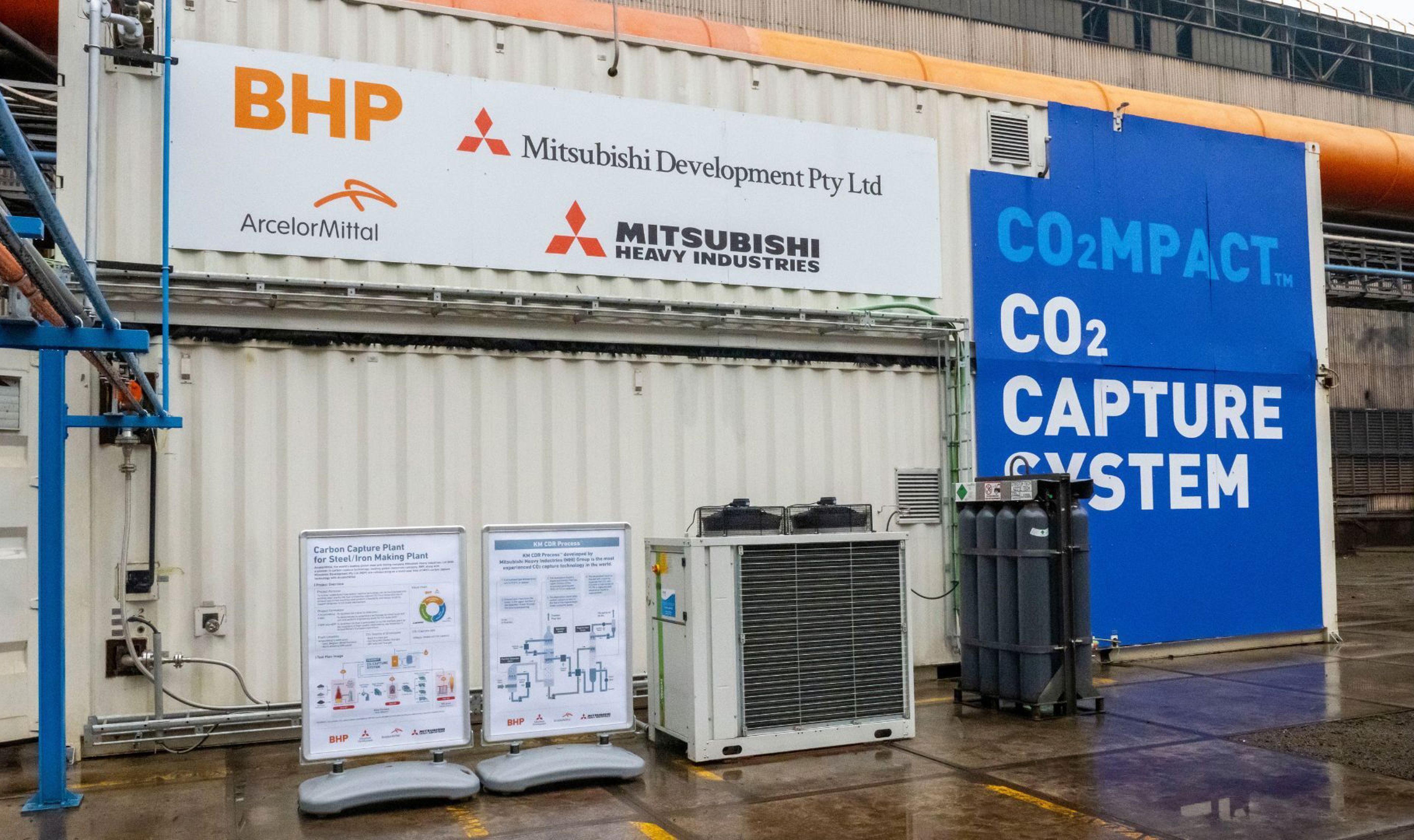
A carbon capture trial by ArcelorMittal, Mitsubishi Heavy Industries, Ltd. (MHI), BHP and Mitsubishi Development Pty Ltd (MDP) has successfully captured carbon dioxide (CO₂) from blast furnace gas by applying MHI’s Advanced KM CDR Process™ at ArcelorMittal’s integrated steelmaking site in Gent, Belgium, concluding the first phase of the trial (phase 1).
The trial demonstrated CO₂ capture, at pilot scale, at rates exceeding 90 per cent and provided the operational and engineering data to support the assessment of the potential for future full-scale application of the carbon capture technology at the Gent blast furnace.
The assessments based on the trial results indicate that applying this technology at full scale to the pre-combustion blast furnace off-gas could reduce the CO₂ intensity at the Gent site by up to 24% . If the technology is further applied across multiple emission points in the steelmaking plant, the approach could support progress towards near zero emissions intensity .
The next phase (phase 2) of the trial aims to broaden the application of carbon capture technology across multiple emission points of the steelmaking process. This includes testing the capture technology on gases from the hot strip mill reheating furnace.
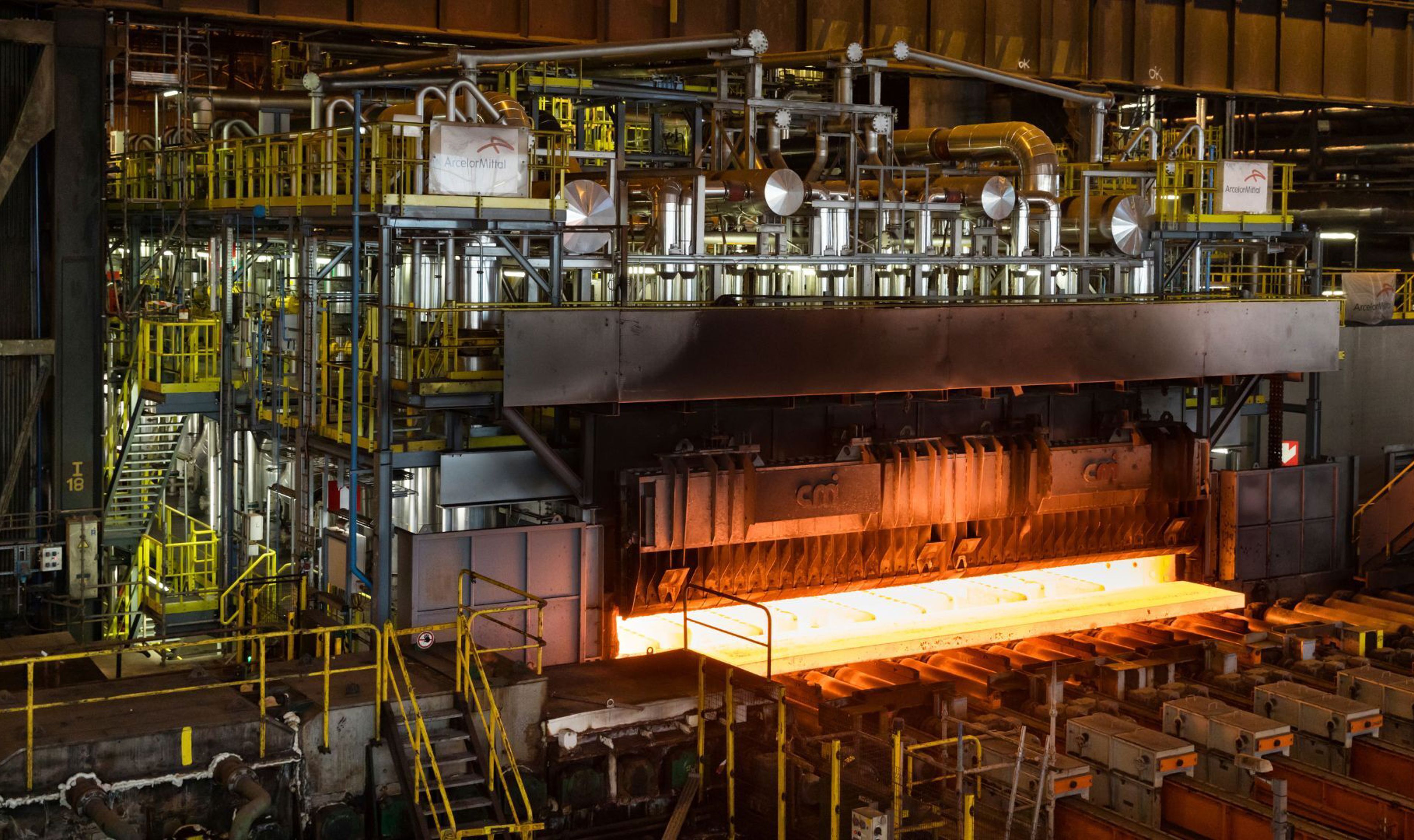
The hot strip mill reheating furnace is fired with gas and heats thick steel slabs to the temperature required for rolling into thin sheets.
Phase 1: Overview of completed trial capturing CO₂ from blast furnace gas
Phase 1 of testing focused on capturing CO₂ from a proportion of the blast furnace off-gas, involving more than 4,500 hours of operational testing.
The blast furnace test demonstrated the technical feasibility of applying MHI’s carbon capture technology in the steel sector at facilities like ArcelorMittal’s site in Gent, a challenging industrial environment in which unburnt process gas, known as off-gas, carries dust, sulphur-containing compounds and other contaminants. The successful test increases confidence in the potential application of this technology across the sector.
Blast furnace off-gas contains significant concentrations of CO2 and carbon monoxide (CO). In this phase of the trial, only the CO₂ was captured.
At an integrated steelmaking plant, the remaining carbon content (in the form of CO), can be used for power and heat generation elsewhere on site, with CO₂ released upon combustion.
Phase 2: Advancing to hot strip mill reheating furnace gas testing
Consistent with the planned phased approach of the trial, an additional emission source within the integrated steelworks is also being assessed for the application of carbon capture technology.
Building on the phase 1 progress, the demonstration’s second phase will capture CO₂ from gases produced by the hot strip mill reheating furnace (post-combustion).
The hot strip mill reheating furnace uses a blend of by-product gases from the steelmaking process, including coke oven gas, blast furnace off-gas and basic oxygen furnace gas, which together with natural gas represents a capture point with another source of CO2 emissions within integrated steelmaking operations.
Phase 2 of the trial will assess the performance of MHI’s technology under a different and more dynamic flue-gas profile, providing further data on the integration of carbon capture across multiple emission points or processes within an integrated steelworks.
Combining carbon capture technology across multiple processes in the steel plant, it could support progress towards near-zero emissions intensity steelmaking for the blast furnace. The results will inform updated engineering and deployment studies for future full scale applications.
Continuing the collaboration established during phase 1 of the pilot, ArcelorMittal is facilitating the trial in Gent, with MHI providing its proprietary Advanced KM CDR Process™, and leading the carbon capture process engineering and technical evaluation. BHP and MDP, as key suppliers of high-quality steelmaking raw materials to ArcelorMittal’s European operations, are providing funding to support the trial.
Together with our partners, we set out to better understand how carbon capture technology can be incorporated into existing steel plants. I am therefore very pleased at the successful outcome of the first stage of this important carbon capture trial at ArcelorMittal Gent. Scaling up the technologies we need to decarbonise, is the vital next step in our journey, and the blast furnace gas trial has given us important data in this respect. I would like to thank our partners, and all ArcelorMittal employees involved in making this stage of the pilot a success, and I look forward to seeing the first results from using carbon capture in the hot strip mill reheating furnace.
Completing more than 4,500 hours of operation and demonstrating CO₂ capture rates exceeding 90% from blast furnace gas represent an important milestone for the application of MHI’s carbon capture technology in the steel industry. The campaign has demonstrated the ability of the Advanced KM CDR Process™ to operate under challenging blast furnace gas conditions, including the presence of dust, sulphur-containing compounds and other impurities, while generating the data to support the assessment for future commercial-scale design. The next phase at the hot strip mill will further strengthen our understanding of how carbon capture can be integrated across multiple emission sources at an operating steelworks. This project demonstrates how MHI’s proven carbon capture expertise can be applied to one of the world’s most challenging industrial decarbonisation applications.
The results of this trial are very promising and demonstrate the abatement potential of the blast furnace and integrated steelmaking route. Through this partnership, we have tested a pathway to meaningful emissions reductions in the near term, and a potential lever for near-zero emissions blast furnace steelmaking longer term.
With around 70 per cent of global steel production from blast furnace steelmaking today, and anticipation for the route to remain a key steelmaking process for decades to come, it is critical that we work to reduce emissions from the blast furnace process while developing alternate steelmaking pathways.
The positive results from phase 1 of testing have strengthened our confidence that carbon capture applied to blast furnace gas could provide a viable pathway for reducing emissions from the steel sector. While energy efficiency improvements and the use of high-quality raw materials will continue to play an important role in reducing emissions over the near to medium term, technologies such as CCUS have the potential to make a significant contribution to the steel industry's long-term decarbonisation efforts
About ArcelorMittal
ArcelorMittal is one of the world’s leading integrated steel and mining companies with a presence in 60 countries and primary steelmaking operations in 14 countries. It is the largest steel producer in Europe, among the largest in the Americas, and has a growing presence in Asia through its joint venture AM/NS India. ArcelorMittal sells its products to a diverse range of customers including the automotive, engineering, construction and machinery industries, and in 2025 generated revenues of $61.4 billion, produced 55.6 million metric tonnes of crude steel and, 48.8 million tonnes of iron ore. Our purpose is to produce smarter steels for people and planet. Steels made using innovative processes which use less energy, emit significantly less carbon and reduce costs. Steels that are cleaner, stronger and reusable. Steels for the renewable energy infrastructure that will support societies as they transform through this century. With steel at our core, our inventive people and an entrepreneurial culture at heart, we will support the world in making that change. ArcelorMittal is listed on the stock exchanges of New York (MT), Amsterdam (MT), Paris (MT), Luxembourg (MT) and on the Spanish stock exchanges of Barcelona, Bilbao, Madrid and Valencia (MTS).
For further information: www.arcelormittal.com
About BHP
BHP is a world-leading resources company. With more than 80,000 employees and contractors, we work in more than 90 locations worldwide and our products are sold globally.
We're focused on the resources the world needs to grow and decarbonise. Population growth, urbanisation and improving living standards are global trends that underpin strong demand for the commodities we produce. Demand for essential commodities is expected to increase as the world pursues digitalisation and seeks to decarbonise.
Our project pipeline and focus on continuous improvement in existing operations leave us well poised for growth across our four commodity pillars of copper, potash, iron ore and steelmaking coal in the decades ahead.
Read more about our approach to climate change: www.bhp.com/climate
About Mitsubishi Development
Mitsubishi Development Pty Ltd has contributed to global industries for almost 60 years through its involvement in the mineral resources businesses. The company is a wholly owned subsidiary of Mitsubishi Corporation, a global integrated business enterprise that develops and operates businesses across a wide range of industries through its global network of subsidiaries and affiliates.
For further information: www.mdp.com.au
About Mitsubishi Heavy Industries Group
Since its foundation in 1884, Mitsubishi Heavy Industries (MHI) Group has grown into a global leader in engineering and manufacturing, consistently addressing societal challenges and supporting people’s lives. By integrating cutting-edge knowledge with the advanced technological capabilities developed over our long history, we will continue to tackle social issues and contribute to the realization of a safe and prosperous society.
For more information, please visit www.mhi.com or follow our insights and stories on spectra.mhi.com.
1Reductions calculated at hot-rolled product level following a cradle-to-gate boundary in accordance with the Worldsteel Association Life Cycle Inventory (LCI) methodology. These figures reflect pre-combustion CO2 capture of Blast Furnace Gas, which separates approximately half of the total carbon content of the blast furnace gas. The remaining carbon (in the form of CO) is still released as CO2 upon combustion of the gas for power and heat generation at the steel plant.
20.40 tonnes of CO2-e per tonne of crude steel for 100 per cent ore-based production (no scrap), as defined by the International Energy Agency (IEA) and implemented in Responsible Steel International Standard V2.0 (‘near zero’ performance level 4 threshold). IEA (2022), Achieving Net-zero Heavy Industry Sectors in G7 Members, IEA, Paris, License: CC BY 4.0, which also describes the boundary for the emissions intensity calculation (including in relation to upstream emissions).