• 10 min read
From ants to AI: 20 years of optimisation excellence at ArcelorMittal
When people think about innovation in manufacturing, they often picture robots, automation or unmanned production lines. But some of the most powerful innovations are much less visible. Sometimes innovation is simply about making better decisions.
Long before artificial intelligence became a buzzword, researchers at ArcelorMittal were exploring how mathematics, computer science and even nature itself could help solve a challenge common to manufacturers everywhere: optimal production plan, i.e., defining what to produce, scheduling when to produce it and sequencing the exact order in which production should happen.
These decisions have a direct impact on cost, time, quality, resource use and customer service. And there is rarely one perfect plan. Improving one outcome may mean compromising on another, while priorities can change from one day to the next depending on customer demand and operating conditions. Optimisation is about finding the best balance at a particular moment to make smarter decisions.
Learning from ants
Scientists have long studied how ant colonies collectively find efficient routes to food. ArcelorMittal researchers were early adopters of ant-colony optimisation techniques for real industrial scheduling problems. As the challenges evolved, Global R&D Digital team moved beyond this early approach, applying other advanced algorithms and developing their own optimisation methods.
Every day, a steel plant must turn hundreds of customer orders into a production plan. Planners need to decide which orders to produce, when to produce them and, crucially, in what sequence. Different steel grades, dimensions and delivery dates must be balanced against equipment constraints, quality requirements and production targets. Changing a sequence along the process affects what happens next, and sometimes what happens much further downstream.
For over two decades, ArcelorMittal Global R&D worked with plant experts and leading academic researchers, building expertise in planning, scheduling, simulation and advanced optimisation, well before today’s surge of interest in AI. Though AI has helped accelerate the process and enabled testing proof-of-concept in industrial applications and across different business scenarios.
It’s about putting order into chaos. The difficulty is not simply creating a schedule, it is finding the most efficient option among an enormous number of possibilities, which cannot all be computed, while balancing priorities that may themselves change.
From proof-of-concept to flagship solution
The result was not a single tool, but a growing capability in tackling complex planning and scheduling problems, one that would eventually lead to solutions such as ESMERALDA.
Borja Ena Rodriguez, Area Leader - Mathematical Optimisation, ArcelorMittal Global R&D, describes ESMERALDA as a flagship outcome of more than 20 years of work in optimisation and planning, showing how technology can turn industrial complexity into smarter decisions and real operational value.
Developed by Global R&D with supply chain, plant and IT teams, ESMERALDA is an AI-based planning and scheduling solution for steel shops – one that does not replace human judgement, it strengthens it. It generates several best-case scenarios, each balancing priorities such as production cost, customer service and product mix differently, and enables planners to make more informed decisions based on the needs of the plant.
Think of a navigation app offering the fastest route, the shortest route or one that avoids traffic. None is automatically “the best” in every situation. The technology identifies the options; the driver chooses the route that suits the journey.
The differentiator
While commercial planning and scheduling software systems are widely available in the market, but as Silvino Fernandez Alzueta, AI-Mathematical Optimisation expert, ArcelorMittal Global R&D, explains:
We wanted to adapt the technology to our processes and our challenges, not adapt our processes to the available software. ESMERALDA allows the model to reflect the realities of each plant, its equipment, materials, operating rules and priorities.
How does it do that? The complexity of simultaneously managing caster scheduling, steel shop constraints, and tundish formation, could not be effectively captured through traditional optimization formulations. ESMERALDA overcomes this limitation using a hybrid simulation-evolutionary framework that constructs and evaluates solutions as part of the search process itself. This unique approach is not available in commercial solutions today and goes beyond the current state of the art reported in the scientific literature.
First developed with Fos-sur-Mer as the pilot plant, ESMERALDA is now also deployed at Asturias and Poland, with Pecém in final testing stage. Across its deployments, it has generated millions in reported benefits, alongside improvements in production sequencing, fewer non-allocated slabs and reduced delays.
Beyond ArcelorMittal
After decades of work, the technology is now protected through an international patent application, turning years of research and industrial know-how into ArcelorMittal intellectual property, with possibilities to be extended to other production environments, opening opportunities to apply the same planning and optimisation expertise more widely.
From early research inspired by ant colonies to a patented AI-powered solution delivering measurable industrial value, the journey reflects a less visible but powerful side of ArcelorMittal innovation: using technology not to take decisions away from people, but to give them better choices.
Related content

Renault Group and ArcelorMittal bring lower-CO₂ steel to next-generation electric vehicles
Renault Group and ArcelorMittal bring lower-CO₂ steel to next-generation electric vehicles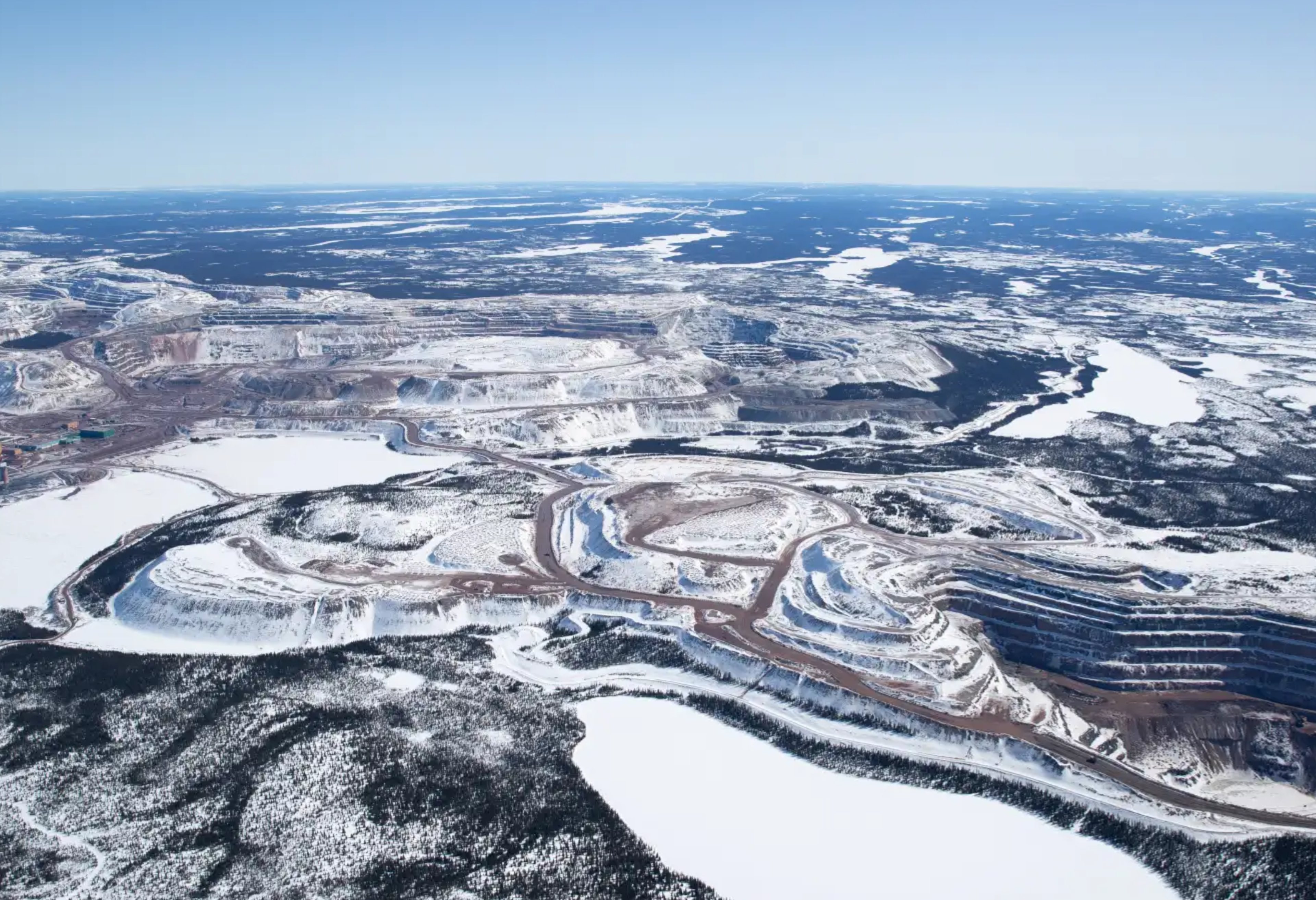
ArcelorMittal Mining Canada shatters records with a 9.6 million tonne blast at Mont-Wright
ArcelorMittal Mining Canada shatters records with a 9.6 million tonne blast at Mont-Wright